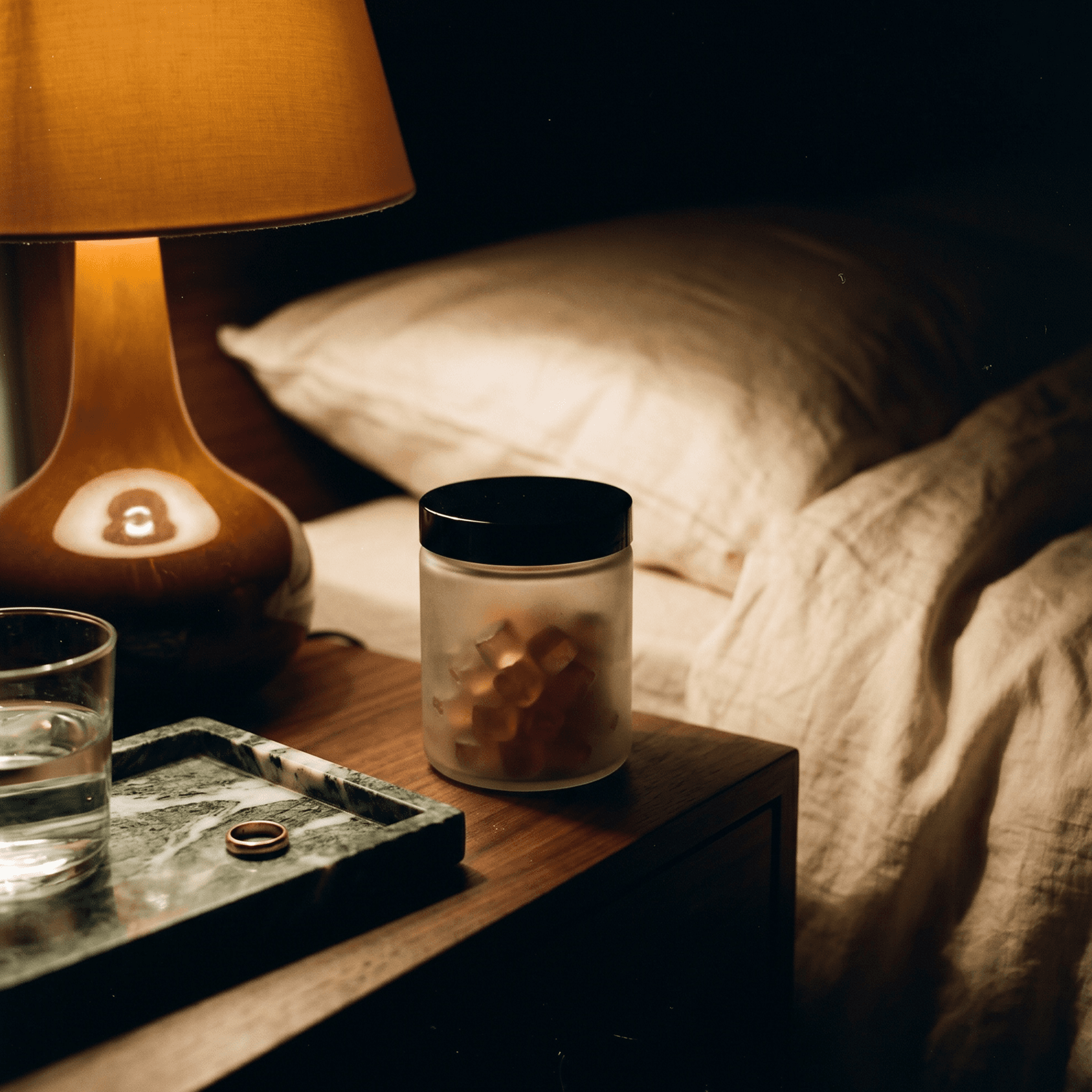
Melatonin is the one of the most common sleep supplements, and odds are good you've either tried it yourself or know someone who swears by it. The experts we spoke with say that melatonin can be a reasonable, low-risk tool in specific circumstances—particularly anxiety-driven insomnia and jet lag. The trouble is, many people are taking it in the wrong dose, at the wrong time, and for the wrong reasons.
Here, Dr. Marc Benton, Director of Sleep Medicine at Atria Health and Research Institute, helps us sort through what the science actually says about when melatonin can be helpful—and when it can’t.
How does melatonin work?
Melatonin is a hormone your body produces naturally that helps regulate your circadian rhythm, or your body’s internal clock. The body typically produces more melatonin when the sun goes down to signal the shift from wakefulness to sleep. This tells your brain to drop your body’s temperature, slow your physiological arousal, and even prepare your eyes for sleep by helping them transition to low-light vision.
With supplements of synthetic melatonin, the goal is to support or amplify that natural process. That matters because, unlike traditional sleeping pills that incite immediate sleep, melatonin serves as a signal of darkness that nudges your body to initiate its natural wind-down, says Dr. Benton. “Synthetic melatonin acts as a biological time-shifter rather than a sedative,” he says. “Because it relies on this complex biological signaling, the results are highly individualized, depending on the timing of the dose, the purity of the supplement, and how your body uniquely metabolizes it.”
What the research shows
The research on melatonin’s effectiveness is surprisingly varied. A 2013 meta-analysis of 19 studies found that melatonin supplements can have a modest effect on sleep, primarily by helping people fall asleep faster, though another 2022 meta-analysis found it did not have a significant effect in adults. Melatonin does not typically help prevent waking up during the night or increase total sleep time. Prolonged-release melatonin has been shown to have larger effects in some people ages 55 and older.
Because of all this, the American Academy of Sleep Medicine does not recommend clinicians use melatonin to treat chronic insomnia, but it has recommended it can be used for some issues related to sleep timing, such as jet lag or sleep problems due to shift work.
The dose question
Interestingly, there’s no consensus on what dose of melatonin is best to take. Based on the available evidence, Dr. Benton recommends trying between 0.5 and 3 mg, taken 1–2 hours before your anticipated bedtime—not the moment you crawl into bed, since melatonin takes time to work. However, he notes that more is not necessarily better. A higher dose may increase the likelihood of side effects—headaches, daytime grogginess, and vivid dreams—without meaningfully improving your rest.
There’s a second reason for caution: what’s on the label may not be what’s in the bottle. Because melatonin is sold as a supplement, it’s not federally regulated. Purity and potency vary widely from brand to brand, and even between batches from the same manufacturer. Ask your doctor for recommended dosing and brands before starting this (or any new) supplement.
When melatonin is most likely to help
For serious sleep concerns, experts recommend working with a sleep specialist to optimize sleep hygiene and trying cognitive behavioral therapy for insomnia (CBT-I).
Melatonin is most appropriate for short-term use, says Dr. Benton. This can include anxiety-driven insomnia, where it may help ease the hyperarousal that makes it hard to wind down, and for jet lag and circadian disruption, where supporting your body’s natural timing signals need to get back on track.
There is one rare clinical sleep disorder for which melatonin is an official part of the medical protocol: REM behavior disorder, a condition where the normal muscle paralysis that occurs during dreaming is disrupted, sometimes causing people to physically act out their dreams with potentially serious consequences. If you suspect you have this condition, it requires formal evaluation, not self-treatment.
For most people without that disorder, melatonin is considered safe, but Dr. Benton still recommends talking with a sleep specialist before experimenting to find what works best for you. (Find more sleep advice on this recent episode of the Decoding Women’s Health podcast or in our article about behavioral sleep tips.)
If you do want to try melatonin
If you’ve already done the foundational work—a consistent schedule, attention to caffeine and alcohol, a well-darkened room—and you’re still struggling, experimenting with melatonin at a low dose is a fine next step.
Here’s how to do it thoughtfully, according to Dr. Benton:
- Start low (0.5–1 mg) and take it at least 1–2 hours before your intended bedtime.
- Keep a log for 2 weeks and assess whether you notice a difference or any side effects.
- If you notice side effects or it’s not working, stop taking it and talk with your care team.
- Choose a verified product. Because supplements are unregulated, third-party certifications matter. Look for products verified by NSF International or the U.S. Pharmacopeia, both of which independently review supplements for accuracy and purity. You can also ask for a certificate of authenticity (CoA) from supplement makers, which will confirm what is in the product down to the batch.
The bottom line
Melatonin can be a helpful, low-risk tool in specific circumstances—especially jet lag and short-term anxiety-driven insomnia—when used at the right dose, at the right time, and from a verified source. It works best as a complement to the harder, more effective work of good sleep habits, and it is not a substitute for them. And remember: If sleep is genuinely disrupting your life, the most important step isn’t finding the right supplement, it’s finding the right support.