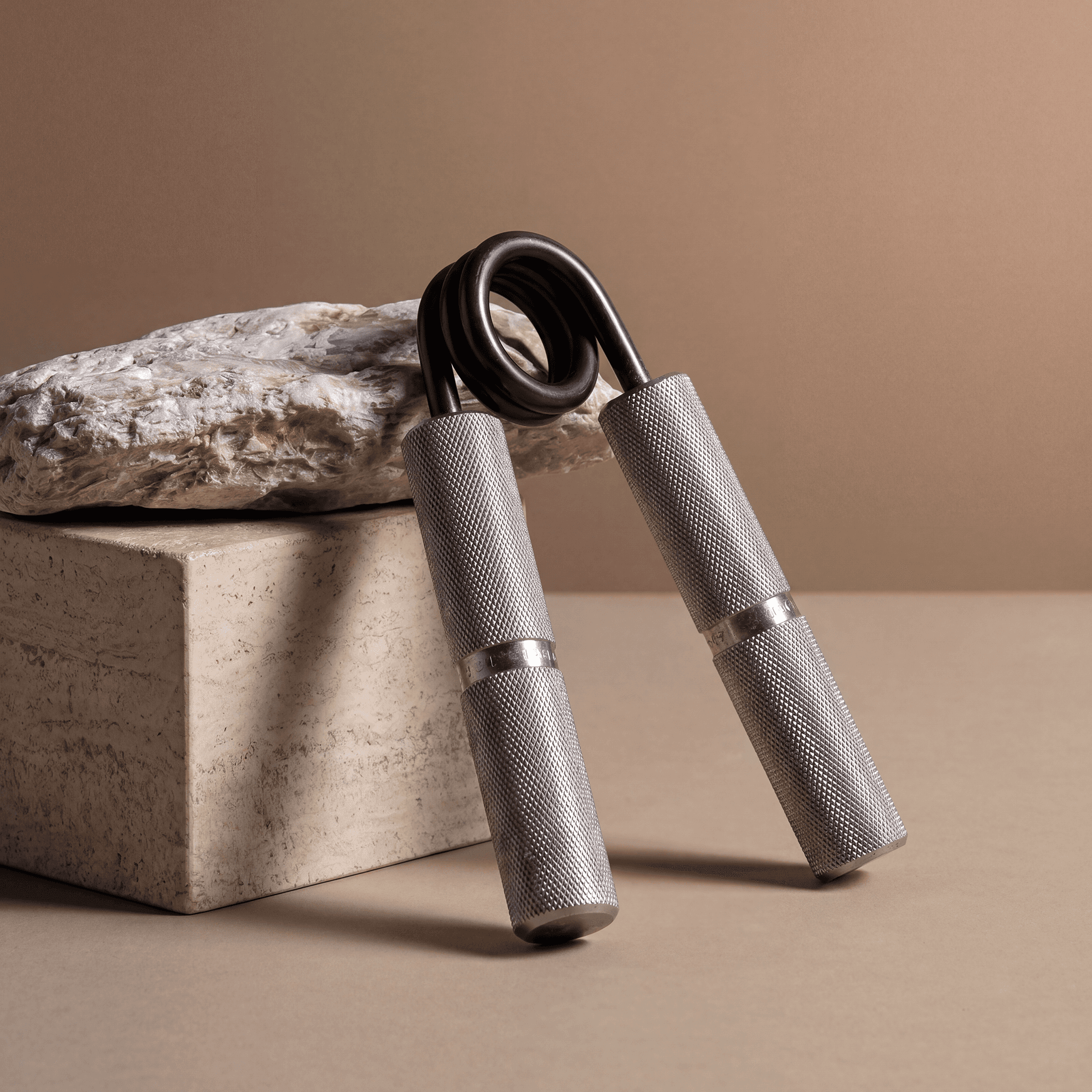
Grip strength may seem like a niche interest for bodybuilders, but it’s actually an excellent indicator of overall health—reflecting not just the strength of the forearm muscles but a complex interplay of muscular and neurological systems, vascular health, insulin sensitivity, and mitochondrial function.
Studies have repeatedly shown a powerful link between lower grip strength and higher all-cause mortality. Poor grip strength is associated with lower bone mineral density, type 2 diabetes, cognitive impairment, depression, and frailty.
Counterintuitive though it may be, if you want to improve your grip strength in support of healthy longevity, grip strengthening devices may not be the right tool. Instead, a holistic approach to building strength—with improved grip strength as a downstream effect—is more likely to drive the results you’re looking for.
What the research says
“Based on the literature, I am confident that grip strength is a biomarker of aging and overall health,” says Dr. Daniel Angerbauer, a preventive medicine physician at the Atria Health Institute.
But when it comes to training grip strength with the goal of lowering all-cause mortality and extending healthy lifespan, Dr. Angerbauer is direct: “I am quite confident that a grip strengthener device alone will not meaningfully extend healthy lifespan.”
“The association between grip strength and longevity comes from populations that achieved higher grip strength through functional activities—and likely from simply having overall better health,” he says. “They were not using a grip strengthening device—they were carrying and lifting heavy things. In my opinion, it’s the carrying and lifting of heavy things that yields the benefits.”
How to improve grip strength
A comprehensive strength training program that includes lifting heavy weights, farmer's carries, pull-ups, and dumbbell work is likely to improve grip strength while building the overall strength associated with improved healthspan. A personal trainer can recommend targeted exercises and help you progress safely over time.
Grip strengthening devices do have a role in more specific contexts: recovering from an injury as part of physical therapy, or helping those at risk of frailty manage everyday tasks like opening a jar or carrying groceries. For those uses, the guidelines are:
- Aim for 3–5 sets of 3–8 repetitions at 70–85% of maximum effort
- Pay special attention to a slow, controlled release
- Take rest periods of 2–3 minutes between sets
- Train 2–3 times per week with 48 hours between sessions
- Increase resistance as you improve
If you have physical or orthopedic limitations or you can't lift dumbbells, you can turn household tasks into grip-strengthening moments. Try the grocery carry: instead of making multiple trips with light bags, focus on a controlled carry with one or two bags, ensuring you are engaging your hand and forearm muscles. Low-impact isometric exercises (tension without movement), like the towel squeeze, are excellent for those with joint pain or limited mobility because they don't require swinging weights or putting stress on the heart. Take a hand towel, roll it up, and squeeze it as hard as you can for 10 seconds, then release. This builds crushing strength without using heavy equipment. Alternatively, resistance bands offer a linear increase in tension that is much easier on the joints than the dead weight of a dumbbell.
Product recommendations
If you do have a need for grip strengtheners for physical therapy or quality-of-life activities, the Atria Health Institute’s Performance & Movement team recommends two brands: Fitbeast for beginners, and Captains of Crush for a more advanced workout. Either option is small and easy to leave on your desk or kitchen counter to use throughout your day or week.