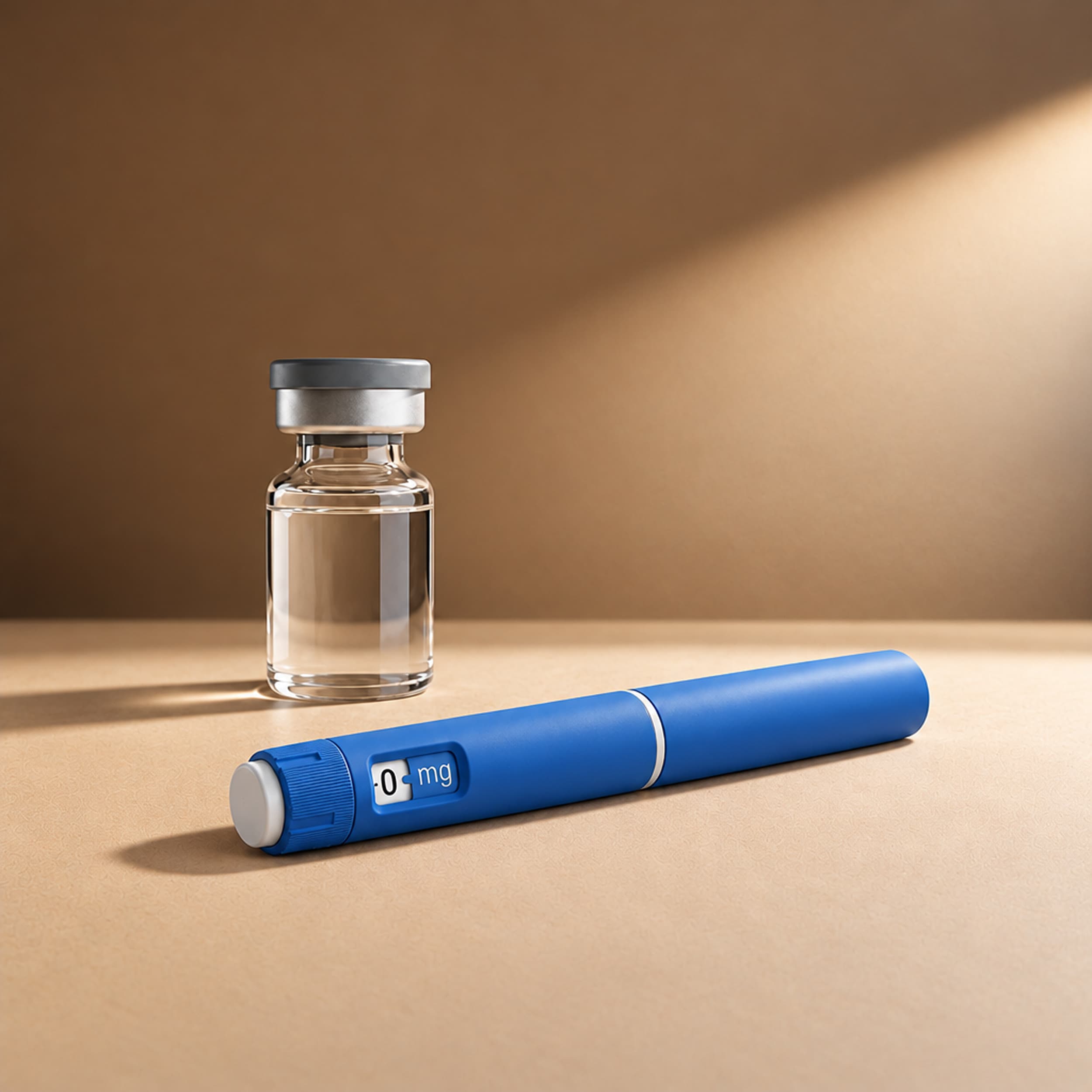
Rarely is a class of pharmaceutical drugs considered a paradigm-shifting success. Even more rarely does a medication influence the broader culture in profound and far-reaching ways. GLP-1 drugs have done both.
Glucagon-like peptide-1 receptor agonists (GLP-1), initially approved to manage type-2 diabetes, are now used for weight loss by tens of millions of people.
A recent Gallup poll found that 11% of adults in the United States are currently taking a GLP-1-based drug for weight loss, up from 3% in 2024. The drugs, previously available only in injectable format for weight loss, are now available in pill form, lowering the psychological barrier for some. Many direct-to-consumer telehealth companies are now offering compounded versions of the medicines, further lowering the barrier to entry.
In households where someone is taking a GLP-1, snack and soda purchases have dropped. Anecdotally, GLP-1 use has influenced the types of cosmetic procedures people ask for. The popularity of the drugs might even affect the fuel efficiency of commercial air travel.
GLP-1s are proven to be very effective in treating type-2 diabetes and managing weight in people with obesity. A 2026 consensus report advocates for earlier use of GLP-1–based therapies or SGLT2 inhibitors—another class of drugs—to protect organs and improve long-term outcomes in people with type-2 diabetes. For patients with obesity, GLP-1s can reduce body weight by up to 20%.
“I'm excited about the potential of these medications," says Dr. Gabrielle Page-Wilson, Director of Endocrinology and Metabolic Health at the Atria Health and Research Institute. “Having spent a significant part of my career thinking about how the brain and hormones regulate appetite and metabolism, these medications are fascinating and complete game changers.”
However, as Dr. Page-Wilson notes, when it comes to off-label uses of GLP-1s, enthusiasm can outpace science. That hasn’t stopped some people from using them off-label to treat conditions ranging from chronic inflammation to addiction.
Off-label drug use
Prescribing a medication “off-label” means using a medication that is approved by the Food and Drug Administration (FDA) — but for a reason or at a dose other than the ones for which it was greenlit by the agency. Off-label use of medications is extremely common, Dr. Page-Wilson notes.
Off-label GLP-1 use, specifically, while hard to quantify, is on the rise. One recent study of electronic health records found that 1.1 million adults in the United States were prescribed a GLP-1 without a documented FDA-approved indication between 2021 and 2025.
Clinical hypotheses that lead to new FDA-approved indications often emerge from real-world observations of off-label use or secondary endpoints observed in randomized controlled trials. These signals can prompt dedicated clinical trials to establish safety and efficacy for new indications. In 2014, for example, liraglutide became the first GLP-1 receptor agonist approved for chronic weight management in adults with obesity or overweight alongside at least one weight-related condition. Controlled trials have since established several additional GLP-1–based indications, including cardiovascular risk reduction in specific populations, kidney disease in adults with type 2 diabetes, and obstructive sleep apnea in adults with obesity.
While substantial weight loss and blood sugar control account for a significant portion of the observed clinical benefits, emerging evidence demonstrates that GLP-1s also exert direct, organ-specific effects. Beyond a reduction in fat mass, GLP-1 receptors are expressed across the blood vessels, heart muscle, kidneys, immune cells and the brain and trigger direct anti-inflammatory, endothelial, and protective signaling pathways. Analysis of some clinical trials indicate that benefits like cardiovascular risk reduction cannot be explained by weight loss alone, pointing to a dual mechanism of direct pharmacology combined with systemic metabolic improvements.
“For unapproved indications in non-obese, overweight, or diabetic populations, therapy should rely on an evidence-informed, risk-stratified framework that balances mechanistic plausibility against safety and individual risk,” says Dr. David Dodick, a neurologist and the Chief Medical and Science Officer of the Atria Health and Research Institute. “While preliminary findings in areas such as neuroprotection and hepatic inflammation are emerging, ongoing controlled trials are critical to define exactly whether and which individuals may derive true net benefit.”
Below are some of the areas where GLP-1s are being formally investigated in off-label capacities.
Brain health
One area of particular interest for off-label use is cognitive protection. Some at the edge of longevity research are openly asking whether GLP-1s should be part of a preventive approach to long-term brain health.
In neurology, GLP-1s have been studied for their potential to slow the progression of Alzheimer’s disease and other dementias. The two largest trials to date, EVOKE and EVOKE+, enrolled roughly 3,800 people with early symptomatic Alzheimer’s disease and found that oral semaglutide (brand name Rybelsus) did not slow cognitive and functional decline over two years.
“However, those results need to be read in context”, said Dr. Dodick. “The trials tested an oral formulation of semaglutide with very low and highly variable bioavailability (on the order of 1 percent of each dose is absorbed), which leaves open the question of whether enough drug reached the brain to have an effect. And they enrolled people whose disease was already established and symptomatic, asking whether the drug could halt a neurodegenerative process that was already well underway. That is a different question from whether GLP-1s, started earlier and delivered at full exposure, might slow brain aging or lower the risk of developing dementia in the first place.”
Dr. Page-Wilson expects that prevention question to be the focus of the next wave of research. Controlling metabolic factors is known to have a significant impact on dementia risk, she notes, and there is a plausible mechanism for a direct effect: GLP-1 receptors are present in several regions of the brain, and these drugs reduce systemic inflammation and improve vascular health, both of which are tied to cognitive aging. What research has not yet done is separate effects on the brain itself from the downstream benefits of improved glucose metabolism and weight loss.
New studies are beginning to take that on. Atria Research and Global Health Institute (ARGHI) and Vero Bioscience recently announced an IRB-approved study, the first in a broader collaboration, that will follow participants treated with tirzepatide over six months and use Vero’s plasma proteomic OrganAge platform to measure whether the drug changes the aging trajectory of the brain and related organ systems, and whether those changes track with established clinical biomarkers of brain health. Rather than waiting for dementia to develop, the study treats brain age itself as the outcome, a design intended to show whether GLP-1 class drugs can protect the brain before cognitive decline sets in.
Minor weight reduction
Though some GLP-1s are now FDA-approved for weight reduction in people with obesity, or with overweight and at least one weight-related condition, these drugs are sometimes used off-label by people without overweight, obesity, or metabolic comorbidities for minor weight reductions (think 5 to 10 pounds). Dr. Page-Wilson advises against this.
“Whether there are lifestyle changes that you're making or using pharmacologics, there are no quick fixes,” she says. “Can there be adverse health consequences from using a GLP-1 [for minor weight reductions]? Yes,” she says.
The medications can cause weight loss beyond the user's intended target, leading to potential hormonal disruptions, under-nutrition, and loss of muscle mass. And the weight loss is unlikely to be permanent, Dr. Page-Wilson notes. "Usually as soon as you stop the medication, there's data to show that you will regain the weight," she says.
Consistent changes to diet and exercise are the best and most sustainable ways to achieve such a goal, she says. That’s because the second-order consequences of short-term GLP-1 use must also be considered. Typically, weight loss is maintained while people stay on treatment, and most of it returns within a year of stopping.
Substance use
GLP-1s are currently being prescribed off-label to treat alcohol use disorder (AUD) and opioid addiction. One retrospective study, published in Addiction, found that GLP-1 prescriptions were associated with lower rates of alcohol intoxication or opioid overdoses for people with AUD or opioid addiction. In August 2026, the U.S. Department of Veterans Affairs announced it was conducting a clinical trial to evaluate semaglutide, a GLP-1 receptor agonist, as a treatment for AUD.
Researchers are also looking at GLP-1s as a potential treatment for other addictions. One small pilot study found that exenatide, another GLP-1 receptor agonist, was associated with higher smoking quit rates when used in addition to a nicotine patch. The authors called for larger studies to confirm the results.
Inflammation
Some scientists theorize that reduced inflammation is a primary driver behind many of the documented benefits of GLP-1s—and that it may be independent of weight loss—but it’s not a closed case.
For example, observational data show that people with osteoarthritis on a GLP-1 were less likely to receive total knee replacement surgery. That may point to effects beyond weight loss, though observational data cannot show that the drugs caused the difference. Dr. Page-Wilson says she has observed patients with some autoimmune conditions, such as dermatomyositis and rheumatoid arthritis, seeing changes in inflammatory markers at small doses of a GLP-1. At Scripps Research, tirzepatide is being investigated as a treatment for long COVID.
Lab and animal studies have also suggested that injecting a GLP-1 drug directly into an arthritic joint may reduce inflammation, but human data are limited. More research is needed in this area.
Aging
A recent study (a pre-print, not yet peer-reviewed) analyzed proteins from 10,052 people across five placebo-controlled semaglutide trials using organ-specific aging clocks. Semaglutide reduced heart biological age by roughly two to four years versus placebo, and drove one- to four-year reductions in other organ age measurements. Interestingly, these effects were not fully explained by weight loss, blood sugar control, or inflammation. More research is needed here, too. An additional analysis found that among 2,970 people aged 65 and older, semaglutide slowed progression of five- and 20-year dementia risk over two years. These findings offer an early glimpse at the potential for GLP-1 receptor agonists to possess anti-aging and neuroprotective benefits through mechanisms beyond metabolism.
The bottom line is one of optimism—and caution
Dr. Page-Wilson is excited about future indications for GLP-1s, and remains cautious about their current hype as a cure-all. “It’s not a salve for every wound,” she says.
Dr. Page-Wilson acknowledges that some people are willing and even excited to experiment with GLP-1s in the hopes of relief, though she also notes that for many such conditions, existing treatments already exist. And for those adamant about off-label GLP-1s, she urges working closely with an experienced physician with the relevant expertise. "You need someone who really understands the risks and benefits," she says.
Much more research will need to be done to determine the potential effects of these medicines, independent of type-2 diabetes management and weight loss.
“There's still a lot of frontier to cover,” says Dr. Page-Wilson.